
Competitors
Track the alternatives your users compare you against, with typed research sources the AI can cite.
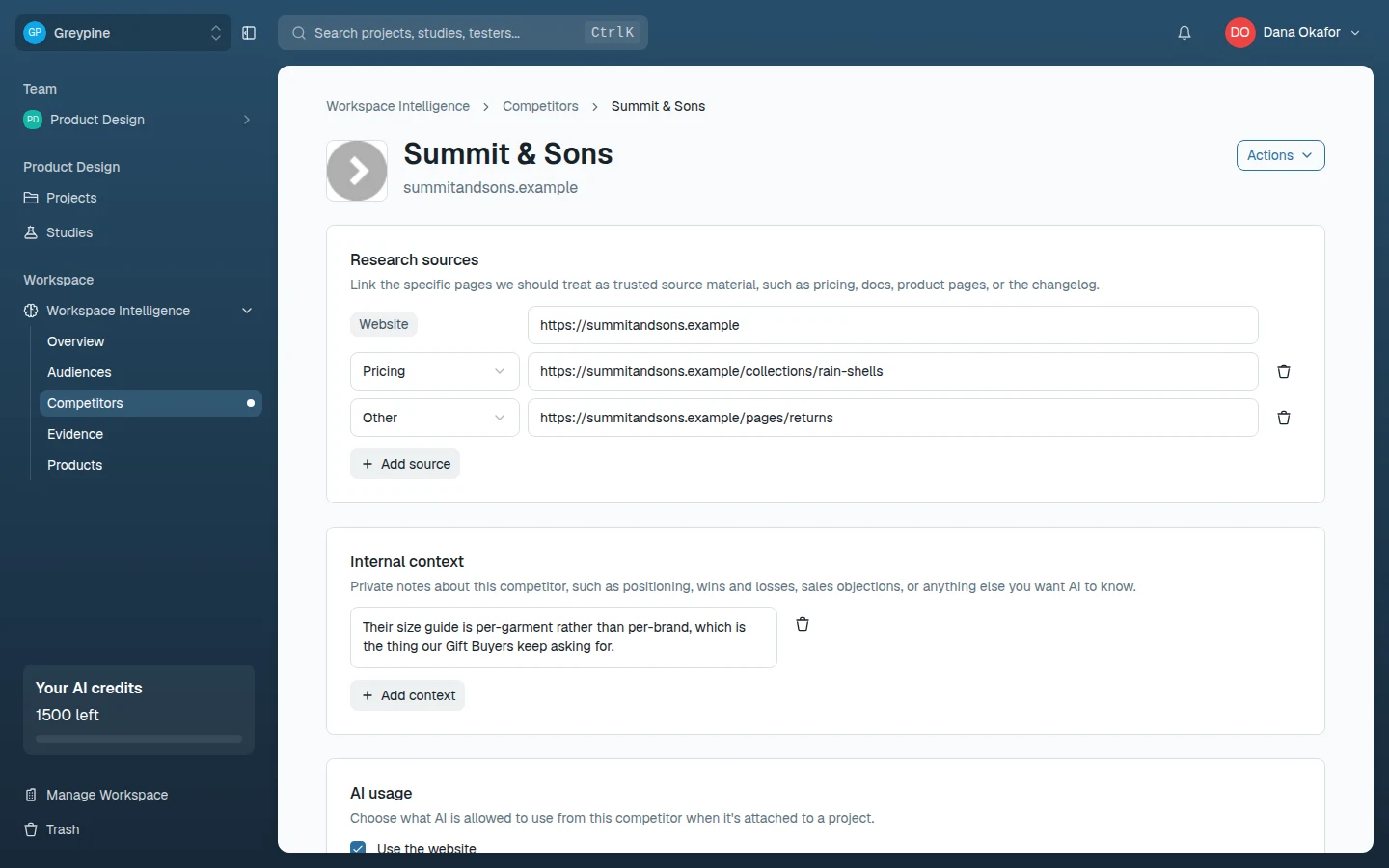
A competitor entry tracks an alternative your users might choose instead — a direct rival, an adjacent tool, or the spreadsheet they'd fall back to. Competitor context sharpens comparative AI output: a design-comparison or persona-reaction block that knows the alternatives can say compared to what.
What a competitor holds
- Name — who they are.
- Website — the competitor's primary URL (required). If another competitor already uses the same website, you're warned before adding a duplicate.
- Research sources — typed links into their public material:
| Source type | Use it for |
|---|---|
| Product page | What they claim the product does |
| Pricing | Packaging and price points |
| Docs | How the product actually behaves |
| Comparison page | How they position against others (including you) |
| Blog / changelog | Direction and shipping velocity |
| Support article | Where their users struggle |
| Other | Anything else worth keeping |
- Internal context — private notes such as positioning, wins and losses, or sales objections.
- AI usage — switches for what AI may use when the competitor is attached to a project: Use the website, Use research sources, Use internal notes, and Allow public web discovery (search beyond the sources you provided).
How competitors are used
- Attached to projects as context for AI features — AI reads a competitor only when it's attached to a project, and only the sources its AI usage switches allow.
- Linked from evidence — an evidence item names the competitors it's about, and AI context carries that link along with the finding.
Related docs
- Workspace Intelligence and audiences
Give the AI features durable context about your product, competitors, target audiences, and research evidence.
- Products
Represent what you're building: description, links, uploaded documents, and notes that AI studies can draw on.
- Evidence
Store research findings as durable evidence items, linked to the audiences, products, and competitors they're about.